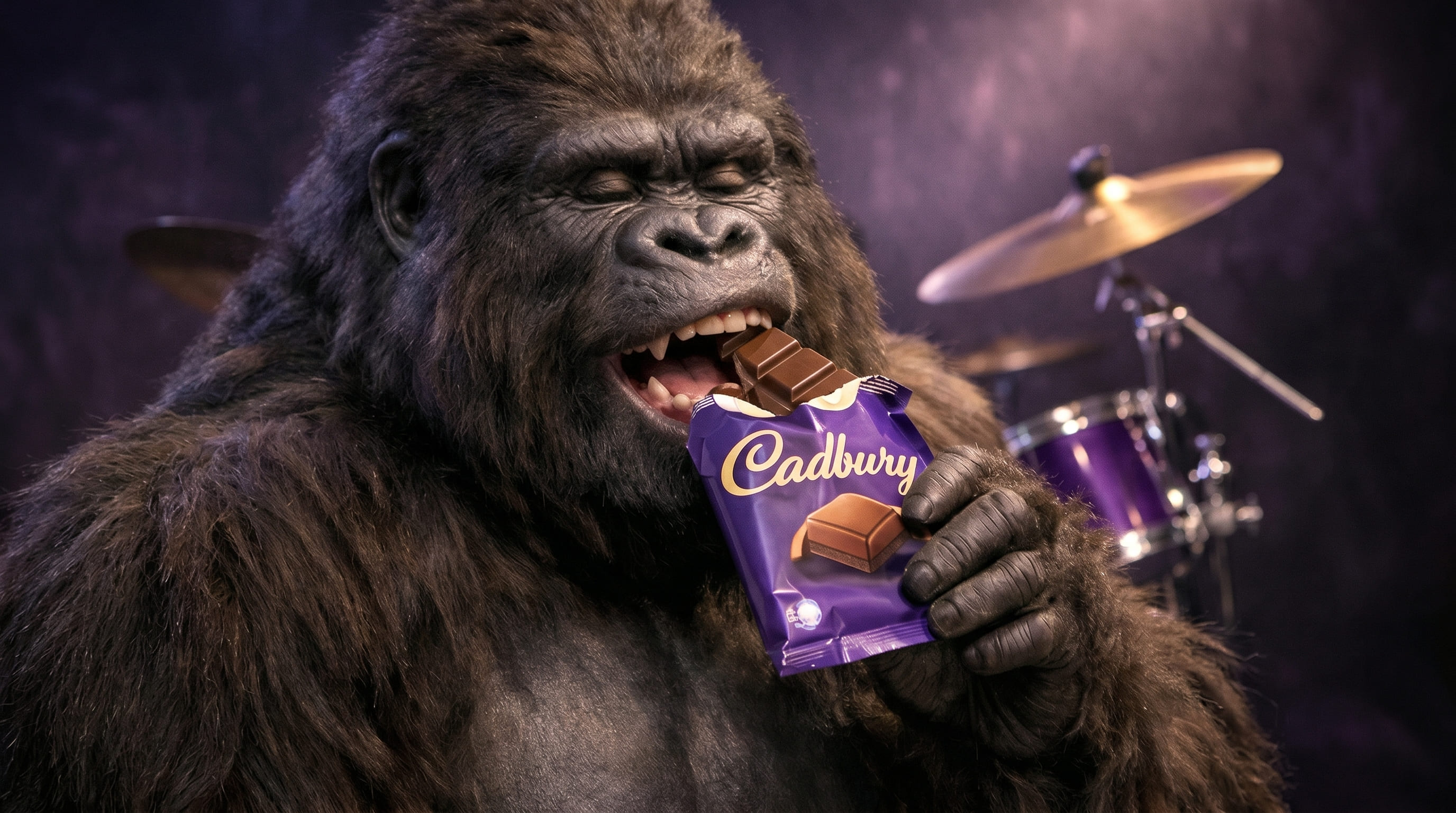

Kuch Khaas Hai: How Cadbury Made Chocolate the Language of Celebration in India
In 1994, a young woman ran onto a cricket field and danced while her boyfriend hit a six. With that 30-second spot, Cadbury repositioned Dairy Milk from a children's treat to the chocolate of Indian celebrations. The campaign ran for a decade and changed the category permanently.

- Brand
- Cadbury
- Year
- 1994
- Agency
- Ogilvy & Mather India
- Industry
- Food & Beverage, Confectionery
In the early 1990s, chocolate in India occupied a narrow cultural shelf. It was a children’s product: something parents bought for birthdays, handed to kids as rewards, or brought back from trips abroad as novelties. Adults who celebrated bought mithai. The halwai’s shop, with its kaju katli and barfi sold by weight in decorative boxes, owned the celebration category entirely. Cadbury Dairy Milk had decent distribution and recognition among children, but it had no meaningful claim on the occasions that drove most purchase volume.
Ogilvy & Mather India, briefed in 1993 to grow Dairy Milk beyond the children’s segment, identified a cultural permission problem rather than a taste or price problem. Adults did not feel that chocolate was an appropriate celebratory food. Changing that required emotional repositioning, not a functional argument.
The Brief and the Cricket Ad
The Ogilvy team, led by creative director Piyush Pandey, worked from a simple observation: celebrating with sweetness is universal across Indian culture. The form of sweetness was habit, not deep preference. If Cadbury could associate Dairy Milk with genuine Indian celebration, the habit could shift.
Cricket provided the solution. In 1994, cricket was the shared emotional infrastructure of a country of nearly 900 million people, a context where public joy was not only acceptable but expected. The ad that aired placed a young woman in the stands during a match. Her partner hits a six. She runs onto the pitch, waving her arms, dancing without any self-consciousness while the crowd watches. He turns and laughs. She is eating a Dairy Milk. The jingle, Kuch Khaas Hai Zindagi Mein (“There is something special in life”), plays over the scene.
The female protagonist was a deliberate choice. Women in 1994 Indian advertising were rarely shown expressing unconstrained public joy unrelated to domestic achievement. A woman dancing on a cricket pitch was a small, warm cultural rupture that made the ad stick. And crucially, cricket was an adult world, which meant the chocolate in her hand was suddenly an adult pleasure. The brand appeared not as a reward but as the natural extension of the moment, the sweet thing you reach for when something wonderful has just happened.
Building the Festive Calendar
Having established the emotional territory, Cadbury and Ogilvy spent the following years extending it into the occasions that drove commercial volume: Diwali, Raksha Bandhan, exam results. These were the moments where mithai had owned the category for generations.
The Diwali strategy involved dedicated festive packaging, television spots normalising chocolate as a festival gift, and a distribution push into markets where chocolate was still uncommon at festive time. The Cadbury Celebrations gift box, launched in the late 1990s, gave the positioning a purpose-built product vehicle priced and packaged as a premium alternative to mithai. Subsequent campaign executions showed a daughter celebrating exam results with her father and a couple marking a private anniversary. Each extended the cultural permission for adults to eat chocolate in celebratory contexts, deepening a habit change that was already underway.
The 2003 Crisis and Recovery
In October 2003, reports of worm infestation in Dairy Milk bars sold in Maharashtra became national news. Retail offtake fell sharply in the weeks before Diwali, the season on which Cadbury had staked years of positioning investment.
The company responded on two fronts. Operationally, Cadbury invested approximately Rs. 15 crore in redesigning its packaging to a new double-wrap polyflow seal that reduced contamination risk during retail storage. On the brand side, Cadbury signed Amitabh Bachchan as ambassador for a campaign that began airing in early 2004. Bachchan was a figure of earned public trust whose involvement functioned as a credibility signal rather than a paid endorsement. The campaign, which showed joyful celebrations of exam success, reaffirmed Dairy Milk’s quality with Bachchan as guarantor. Sales recovered within approximately six months, demonstrating how much emotional equity a decade of consistent positioning had built.
The Long-Term Shift
By the mid-2000s, the repositioning had succeeded on the terms Ogilvy originally defined. Cadbury Dairy Milk’s market share in the Indian chocolate category climbed from roughly 55% in the early 1990s to above 70%. More significantly, the cultural habit had shifted in ways aggregate data cannot fully capture. Chocolate boxes at Diwali became expected rather than unusual. Indians who grew up during the campaign years carried the association of Dairy Milk with celebration into adulthood, and that association proved durable across subsequent decades.
The “Khaane ke baad kuch meetha ho jaaye” platform that followed in the late 2000s extended the positioning further, arguing that a small piece of Dairy Milk was the appropriate close to any meal. This evolution from celebration chocolate to everyday sweet was made possible by the decade of emotional work the Kuch Khaas Hai platform had already done.
The campaign’s lasting legacy is the category norm it created. Every international confectionery brand that has since entered India has positioned around gifting and celebration, following the cultural territory that Cadbury and Ogilvy cleared in 1994. That is the measure of a repositioning that actually worked: when your competitors adopt your frame, the frame has become the category.
Key results
Cadbury Dairy Milk grew from 55% to 70%+ market share in Indian chocolate category during campaign era
Cadbury displaced traditional mithai as the gifting default during Diwali within a decade
Kuch Khaas Hai variant ran from 1994 through the mid-2000s; spirit continued under later campaigns
Changed consumer perception of chocolate from foreign/children's product to mainstream Indian celebratory food
SWOT analysis
S Strengths
- Cricket setting gave the ad immediate relevance to virtually every Indian household
- Female character's spontaneous joy was unusual and memorable in 1994 Indian advertising
- Repositioning was grounded in a genuine insight: Indians celebrate differently, with sweets
- High production quality and memorable jingle drove repeat viewership
W Weaknesses
- Repositioning adults as a target took years of sustained investment to fully land
- Premium pricing meant the chocolate itself was aspirational, not everyday, for many households
O Opportunities
- India's growing middle class was ready for a premium celebration product
- Traditional mithai (sweets) market was fragmented and unbranded, so Cadbury could own the modern alternative
T Threats
- Nestle's KitKat and other imports were increasing competition
- Cultural resistance to replacing traditional sweets with chocolate at festivals
Cadbury's masterstroke was not making chocolate more Indian. It was making celebrations more chocolatey. By associating Dairy Milk with genuine moments of Indian joy rather than Western children's occasions, Ogilvy & Mather created a permission for adults to eat chocolate unapologetically.
Want help with this for your brand? See my services.
Concepts in this case study
Enjoying our content? Make us a preferred source on Google.
Add as Preferred Source