Burger King Tweeted the Wrong Sentence First

The tweet read 'Women belong in the kitchen.' The scholarship announcement was three tweets below. Most people never got that far. A lesson in platform mechanics, earned provocation, and the cost of being clever.
At 8:17 in the morning on International Women’s Day 2021, Burger King UK posted a tweet. The tweet read: “Women belong in the kitchen.”
The plan was for this to be the provocative opening line of a Twitter thread that would, in subsequent tweets, reveal the intended meaning: that professional kitchens are male-dominated, that Burger King was committing to change that through culinary scholarships for female employees, and that the opening line was a deliberate reversal of a sexist cliche designed to generate attention for a genuinely positive initiative.
The plan assumed that people would read the whole thread.
Twitter users don’t read the whole thread. They screenshot the first tweet.
The Context
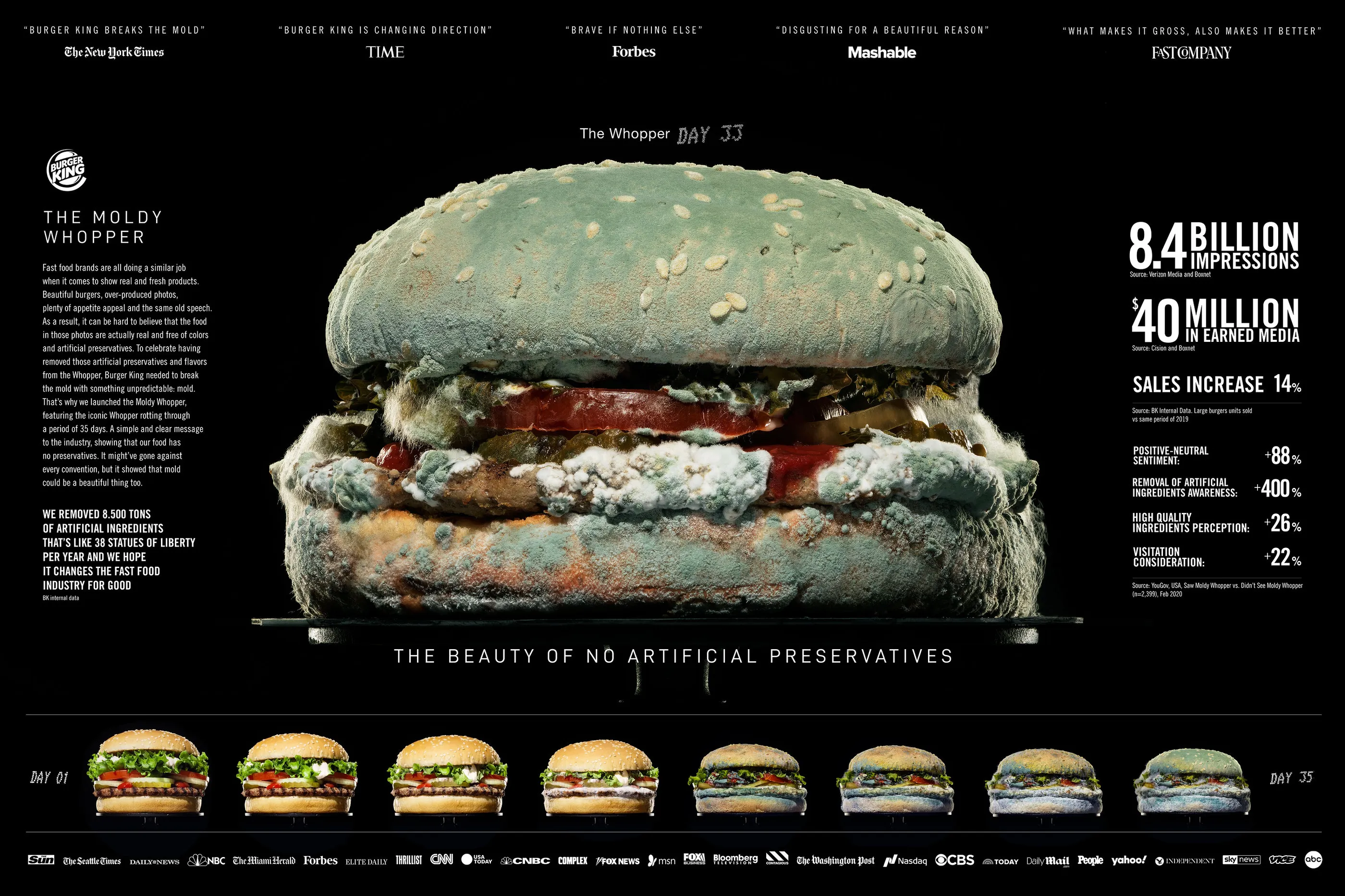
Burger King’s social media presence, particularly in the UK, had spent the prior several years building a reputation for wit, provocation, and competitive cheekiness. The Moldy Whopper campaign. The various McDonald’s jabs. The willingness to use self-aware humor in ways that felt different from the usual fast food marketing pablum. The team was good at this. They’d demonstrated the ability to use an unexpected angle to make a serious point land with more impact than a straightforward message would have.
That track record was real. But it had a ceiling — a specific kind of provocation it had earned the right to make. The humor had been about food, about competition, about brand personality. It had not been about gender dynamics. It had not been about feminist politics. It had not positioned Burger King as a voice in any conversation about how women are treated in professional spaces.
That distinction — the earned versus the unearned provocation — is the hinge on which the campaign’s failure turns.
The Campaign
The creative concept was internally logical. International Women’s Day creates a news environment where a gender-focused initiative will get disproportionate coverage. The culinary industry genuinely has a gender disparity problem: women make up a majority of culinary school students but a minority of professional head chefs. Burger King’s scholarship commitment was a real investment in addressing that disparity. You want people to notice the initiative, not just the statement. So you use a hook.
The hook chosen was “Women belong in the kitchen.” The argument for using it: by leading with the cliche, Burger King would draw attention, generate outrage, and then deliver the reversal — we think women belong in professional kitchens, which is why we’re funding them to get there. Shock, then redirection, then point made. Classic reveal structure.
The argument against was the one the team apparently didn’t weight heavily enough: Twitter is not a sequential-reading medium. People encounter tweets in fragments, through retweets and quote tweets and screenshots, stripped entirely of the context the thread provides. The first tweet — “Women belong in the kitchen” — was always going to reach a larger audience than the thread. The shock was going to land before the point. And once the shock landed, the correction cycle couldn’t catch up.
Within hours, the screenshot of the opening tweet was everywhere. The screenshots didn’t include the scholarship information. They didn’t include the follow-up explanation. They were just the opening line, shared by thousands of accounts who had encountered it without context, accompanied by furious commentary about what Burger King apparently thought about women.
Some of those sharing the screenshot eventually saw the full thread and softened their response. Most didn’t. The media coverage that followed was primarily about the tweet, not the scholarship. The BBC story about it mentioned the scholarship program. It led with the tweet.
Why It Failed
The failure has a structural cause and a strategic cause, and they’re related.
The structural cause is platform mechanics. Twitter’s engagement model is built around individual tweets, not threads. Retweets carry the tweeted content, not the thread. Screenshots share the frame, not the context. Any campaign strategy that depends on the audience engaging with a thread in sequence is a campaign strategy designed for a platform that doesn’t exist.
This is a failure of medium understanding that’s surprisingly common. Creative teams develop campaigns using the logic of a medium they imagine — the attentive reader who follows the narrative from beginning to end — rather than the medium that actually exists, where most people encounter the first piece of content and make their judgment there. The “Women belong in the kitchen” thread would have worked in a different format. A video that opened with the phrase and revealed the context visually. A full-page print ad with the opening line large and the explanation below. A television spot structured around the reveal. Any of those would have maintained editorial control over the sequence.
Twitter gave up that control the moment the first tweet was posted.
The strategic cause is the unearned provocation problem. Brands earn the right to make certain kinds of cultural interventions through years of demonstrated perspective and consistent behavior. Patagonia has earned the right to make provocative environmental statements because its entire business model is organized around environmental values. Cards Against Humanity earned the right to absurdist anti-Black Friday stunts because its brand identity is explicitly built on transgression. Their provocations feel authentic because they’re consistent with everything else the brand does and says.
Burger King had not established any relationship with feminist issues, workplace gender equity, or culinary industry dynamics before this campaign. The scholarship program was real, but it had no public history, no established advocacy, no prior communication that would have told audiences “this is something Burger King cares about.” The provocation therefore read as a tactic in search of a cause rather than a cause looking for an effective expression.
When provocation lands without credibility, it reads as exploitation — using a serious social issue as a marketing vehicle without genuine investment in the issue. Whether that was Burger King’s actual intention is beside the point. Audience perception is the reality that matters.
The Results
The tweet was deleted approximately eight hours after posting. Burger King UK issued an apology stating that the tweet had “missed the mark” and acknowledging that the context had not carried. The apology was widely covered, which created a second news cycle about the failure. The scholarship program, the actual initiative the campaign was designed to promote, received a fraction of the coverage the controversy generated.
The Burger King brand team’s credibility — both internally and externally — took a hit. The kind of sharp, self-aware social media work they’d built their reputation on became harder to defend to stakeholders who now cited this campaign as a reason for caution. The failure created institutional risk-aversion around exactly the creative approach that had been working.
The culinary scholarship program continued, largely out of the public eye. The students who benefited from it were real and the initiative was meaningful. The campaign’s failure didn’t end the program; it just ensured that almost nobody knew about it.
The Lesson for Today’s Marketers
Provocation-then-reveal is a legitimate creative structure. It can work on social media when the setup and payoff are contained within a single piece of content — a video, an image with copy, a post designed to be read as a unit. The structure fails when the platform’s sharing mechanics can separate the setup from the payoff, because the setup will always travel farther and faster than the complete thought.
Before executing any provocative campaign opening, ask one question: what happens if only this first element is shared, stripped of all context? If the answer is “it causes genuine harm or offense,” the structure needs to change regardless of how smart the full concept is. Good intentions don’t control how content travels.
The earned provocation point is perhaps more broadly applicable. Brands are not automatically entitled to speak about every issue, use every creative format, or claim every cultural space. The right to make a certain kind of joke, or to lead with a provocative statement about a sensitive topic, is something built over time through demonstrated values and consistent behavior. Borrowing that credibility for a single campaign, without having deposited it over time, is the creative version of writing a check you haven’t funded.
The practical test: would anyone who follows this brand and understands what it stands for be surprised by this campaign? If the answer is yes — if the campaign requires context the brand hasn’t established — the campaign is ahead of the brand’s credibility curve. Either slow down the campaign or spend the time building the credibility first. Trying to do both simultaneously, in a single tweet, is how you end up with a deleted apology instead of a scholarship announcement.
Key Results
- Time Before Deletion: Approximately 8 hours
- Negative Media Coverage: Covered by BBC, CNN, AP, and hundreds of publications globally
- Scholarship Program Awareness: Overshadowed entirely by backlash
SWOT Analysis
| Strengths | Weaknesses | Opportunities | Threats |
|---|---|---|---|
|
|
|
|
Key Takeaway
Earned provocation requires a history of being right. When a brand attempts to shock its way into a conversation it hasn't earned the right to lead, the shock lands and the point doesn't.
Enjoying our content? Make us a preferred source on Google.
Add as Preferred Source