
Porter's Value Chain Analysis
Originated by Michael Porter in 1985
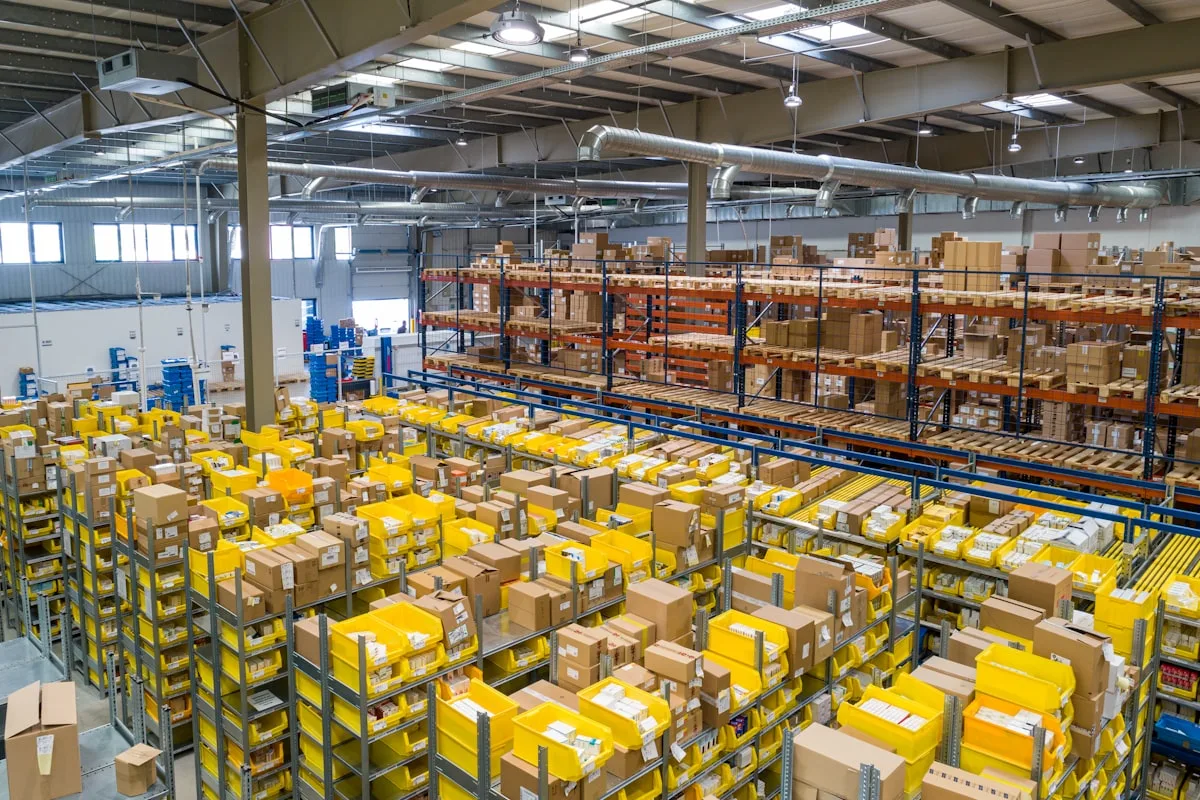
A framework for mapping every activity in a business that creates value for customers, identifying where competitive advantage is actually produced and where cost or differentiation can be improved.
Marketing teams have a habit of treating competitive advantage as a messaging problem. If we could just explain our product better, customers would see why we’re different. Sometimes that’s true. But often the real source of advantage, or the real source of vulnerability, is buried inside the organization, in the activities that customers never see directly but experience in every interaction.
Porter’s Value Chain Analysis is a tool for making those internal activities visible and connecting them to the value customers actually receive. It’s not a marketing framework. But it has enormous implications for marketing, because it locates where competitive advantage is actually generated.
What the Framework Actually Does
The Value Chain divides a business into discrete activities and asks: which of these create value for the customer, and which create value for the firm through cost efficiency? Porter’s original formulation separates activities into two types: primary activities (those directly involved in creating, selling, and delivering the product) and support activities (those that enable the primary activities to function).
Primary activities run in sequence: Inbound Logistics, Operations, Outbound Logistics, Marketing and Sales, and Service. Support activities cut across all of them: Firm Infrastructure, Human Resource Management, Technology Development, and Procurement.
The insight is that competitive advantage isn’t created by any one activity in isolation. It emerges from how activities link together and reinforce each other. A firm with superior inbound logistics that sources materials faster and cheaper than competitors has an advantage that compounds through Operations into Outbound and eventually into pricing flexibility in Marketing and Sales. Disrupting one link in that chain can undermine advantage across the entire system.
The Origin
Porter introduced the Value Chain in Competitive Advantage: Creating and Sustaining Superior Performance, published in 1985 as a companion to Competitive Strategy (1980). Where the Five Forces and Generic Strategies frameworks focused on competitive positioning at the industry level, Value Chain Analysis went inside the firm to understand how that positioning was operationally sustained.
Porter was trying to give managers a systematic way to analyze the activities that collectively constitute their business, rather than thinking about the business as a monolithic entity. The goal was to identify which specific activities generated the competitive advantage the firm was claiming in the market, and where that advantage was leaking.
How to Apply It
Start with a thorough map. List every significant activity in each of the nine categories. Be specific, not generic. “Manufacturing” is not a useful activity label. “Assembly of the primary product at the main production facility under controlled quality conditions” is the beginning of something you can analyze.
For each activity, ask two questions: First, what does this activity cost, relative to competitors? Second, how much does this activity contribute to the value a customer perceives in the final product or service?
Activities that cost a lot but create little perceived value are candidates for cost reduction or outsourcing. Activities that create significant perceived value are candidates for investment and protection. Activities that create value the firm hasn’t communicated to customers represent a marketing opportunity: the work is real, but the story isn’t being told.
Look for linkages between activities. These are often where the most durable competitive advantages live. IKEA’s flat-pack model links its Design activity (creating products that can be disassembled) to its Outbound Logistics (shipping flat boxes more efficiently) to its Service model (customers assemble themselves) in a system that competitors can observe individually but can’t easily replicate as a whole.
For marketing teams specifically, the most useful question is whether your marketing promises are backed by operational reality. If you’re claiming premium quality, what in Operations and Service is actually delivering it? If you’re claiming fast delivery, what in Outbound Logistics supports that? Gaps between the marketing promise and the operational capability are liabilities waiting to become crises.
A Real Example
KFC’s “FCK” apology ad in 2018 is a case study in how a supply chain failure (an Inbound Logistics breakdown) became a marketing moment. KFC had switched UK distribution from a logistics specialist to DHL, which couldn’t handle the volume or temperature requirements of fresh chicken. Most of the chain’s UK locations ran out of chicken. The primary activity failure was operational and embarrassing.
The marketing response, running a full-page ad in The Sun and Metro with the KFC bucket rearranged to spell “FCK” and a frank, humorous apology, was almost universally praised. It’s a genuine example of a marketing team responding with authentic voice to an operational crisis they didn’t create. But the value chain lens is more sobering: the root cause was a procurement and logistics decision that prioritized cost savings over supply chain resilience. Marketing brilliance contained the reputational damage. It didn’t fix the activity failure.
Honda’s Cog advertisement for the Accord took the opposite approach: it made the operational activity visible as the marketing story. The two-minute film shows 85 Accord components triggering each other in a Rube Goldberg chain reaction, communicating the precision and engineering care that went into the car’s manufacture. The Operations and Technology Development activities were the content. That’s value chain thinking applied to creative strategy: showing the value where it’s actually created rather than asserting it abstractly.
Flipkart’s Big Billion Days launch in 2014 illustrates what happens when Marketing and Sales dramatically outpaces Outbound Logistics. Flipkart ran aggressive promotions that generated enormous demand but couldn’t fulfill it. Server crashes, incorrect pricing, out-of-stock products, and delivery failures followed. The marketing promise and the operational delivery were not linked. Value chain analysis before the launch would have identified the gap between the promotional scale and the logistics infrastructure’s capacity.
When the Framework Falls Short
Value Chain Analysis was built for linear, product-centric businesses. A manufacturer that makes things, ships them, and sells them fits the model cleanly. A platform business like Airbnb or Google, where the core activity is matching two sides of a market rather than producing a physical good, fits much less comfortably. The framework needs substantial adaptation to map platform dynamics usefully.
Service businesses also strain the model. For a professional services firm or a software company, the boundaries between Operations, Technology Development, and Human Resource Management blur to the point where discrete activity mapping loses precision.
The analysis is also time-intensive when done properly. A superficial pass through the nine categories produces generic labels, not insight. The depth of the analysis depends on the quality of operational data and the willingness to look critically at internal processes that teams may be protective of.
When to Use It (and When to Reach for Something Else)
Value Chain Analysis is most useful during strategic reviews when you suspect your competitive advantage is eroding and you need to diagnose where. It’s also valuable before major operational changes (new supply chain, new distribution model, major outsourcing decision) to understand what you might be disrupting.
It’s a poor tool for rapid decision-making. If you need a framework for a campaign brief or a quarterly planning session, the Business Model Canvas is faster and more flexible. If you need to understand the competitive structure of your industry rather than your internal operations, Five Forces is the right starting point.
For marketing teams in particular: use Value Chain Analysis when you suspect your brand promises are outrunning your operational reality. The framework won’t write your ads. But it will tell you whether the product behind the ads can actually deliver what you’re promising, and that matters more in the long run than any single campaign.
The Framework Components
- Inbound Logistics: Receiving, storing, and distributing raw materials and inputs. Includes supplier relationships, warehousing, inventory control, and transportation to production facilities.
- Operations: Transforming inputs into the final product or service. Manufacturing, assembly, packaging, equipment maintenance, and quality control all live here.
- Outbound Logistics: Getting the finished product to the customer. Distribution networks, order fulfillment, delivery systems, and warehousing for finished goods.
- Marketing and Sales: Activities that communicate the value proposition and drive purchase. Pricing strategy, advertising, channel management, sales force operations, and promotion.
- Service: Post-sale activities that maintain or enhance product value. Customer support, warranty service, installation, training, and returns management.
- Firm Infrastructure: General management, finance, legal, planning, and accounting. The support activities that enable all primary activities to function.
- Human Resource Management: Recruiting, hiring, training, developing, and compensating the people who execute all other activities.
- Technology Development: R&D, product design, process engineering, and the information systems that support operations across the chain.
- Procurement: Purchasing inputs used across the value chain: not just raw materials, but equipment, supplies, and services at every level.
When to Use This Framework
- Identifying where your true competitive advantage is generated within your operations
- Finding cost reduction opportunities without degrading the value customers actually experience
- Diagnosing operational bottlenecks that are undermining marketing promises
- Evaluating potential outsourcing decisions by mapping which activities are core vs. peripheral
- Auditing supply chain vulnerabilities before they become customer-facing crises
Limitations and Criticisms
- Designed for linear, product-based business models and fits awkwardly on platform businesses, SaaS, or service firms
- Internal focus can underplay the importance of ecosystem partners, complementors, and platform relationships
- Time-intensive to map thoroughly; a shallow application produces generic outputs that don't drive decisions
- Assumes activities can be discretely categorized, when in practice they bleed into each other
- Less useful for diagnosing brand or perception problems, which don't fit neatly into activity mapping
Case Studies That Demonstrate This Framework
Related and Alternative Frameworks
- Porter's Five Forces
- Business Model Canvas
- SWOT Analysis
Key Takeaway
Competitive advantage isn't created by a single decision or campaign. It's accumulated through a system of interconnected activities, each reinforcing the others. Value Chain Analysis is how you see that system clearly.
See these frameworks in action: Marketing Case Studies