Dreamforce: How Salesforce Turned a Tech Conference Into a Brand Religion
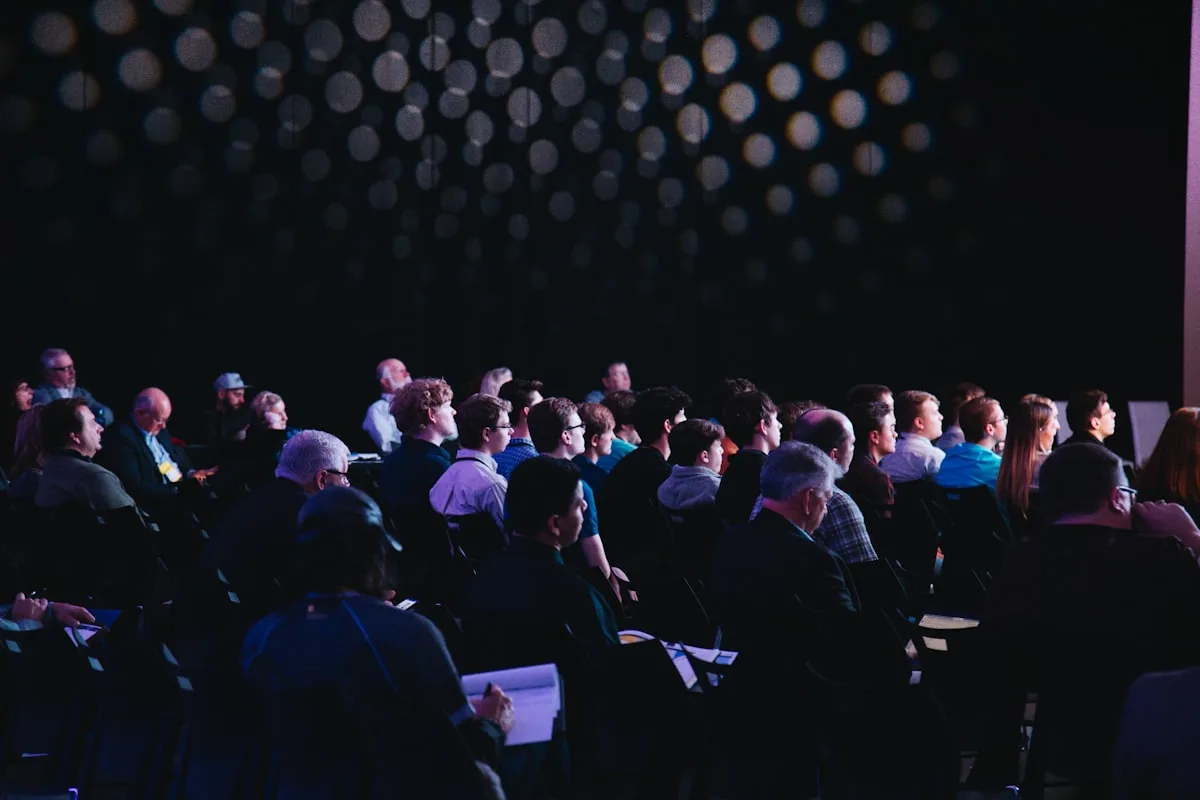
Dreamforce started with 1,000 Salesforce customers in San Francisco in 2003. By the late 2010s it had grown into one of the world's largest software conferences, with 170,000 registered attendees and headliners like Michelle Obama — and it became Salesforce's most effective marketing vehicle.
In 2003, Marc Benioff gathered about 1,000 Salesforce customers in San Francisco for the first Dreamforce. The event had sessions about CRM best practices, some product announcements, probably a dinner somewhere. By almost any measure, it was modest. What Benioff understood, though (what he seemed to intuit before anyone had a framework for it) was that the conference wasn’t a marketing expense. It was a community investment. And communities, compounded over time, become something money can’t simply buy.
Sixteen years later, Dreamforce 2019 drew an estimated 170,000 registered attendees, generated a reported $600 million in economic impact on San Francisco, and featured Michelle Obama as a keynote speaker. Enterprise software companies spend hundreds of millions on advertising that generates awareness. Salesforce built something that generates identity. That’s a different category of return entirely.
The Context
Salesforce launched in 1999 with a famously provocative marketing campaign. Benioff took out ads featuring the word “software” in a circle with a line through it, positioned the company as the end of enterprise software as the world knew it, and staged a protest outside a Siebel Systems conference that year. The company understood from its earliest days that brand was not separate from strategy. How you positioned yourself determined who took your call, who believed your pitch, who thought of you when the board asked for a CRM recommendation.
The “no software” campaign established Salesforce’s combative personality in the market. But combativeness gets you noticed, not loved. The company needed a vehicle that could convert awareness into belonging, one that could make customers feel like they were part of something larger than a software subscription. Dreamforce became that vehicle.
The early 2000s SaaS market was still fighting for legitimacy. Enterprise buyers were accustomed to on-premise software from companies like Siebel, SAP, and Oracle. The idea of keeping sensitive customer data in the cloud, managed by someone else and accessible via a browser, was a hard sell to IT departments and procurement committees. Salesforce needed to demonstrate, through sheer accumulated evidence, that it was not a startup gamble but a category incumbent. Dreamforce’s growth was that demonstration.
The Campaign
The conference grew slowly and then all at once. Through the mid-2000s, Dreamforce expanded steadily, adding sessions, sponsors, and attendees as Salesforce’s CRM market share grew. By the early 2010s, it had become the largest cloud computing conference in the world by attendance, a claim Salesforce made without much pushback because no competitor had built anything comparable.
The programming strategy was deliberate and distinctive. Most enterprise software conferences fill their stages with product managers explaining feature updates. Dreamforce did that too. Salesforce used the event for major product announcements, including the debut of Salesforce Einstein (its AI layer) and numerous platform expansions. But the surrounding programming had almost nothing to do with software. Benioff brought in Al Gore to talk about climate change. He had Deepak Chopra on stages. Musicians performed ticketed Dreamfest concerts. Michelle Obama, Oprah Winfrey, and George W. Bush all appeared at various years’ events.
This was not eccentricity. It was a coherent strategy. By populating Dreamforce with figures who had cultural significance beyond enterprise software, Salesforce borrowed their gravitas while simultaneously signaling something about what kind of company it was. A CRM vendor doesn’t get Oprah on stage. A company that believes business is a platform for change (Benioff’s stated philosophy, codified in his book “Trailblazer”) might. The speaker roster was an argument about Salesforce’s self-concept.
The Ohana concept formalized the community’s emotional architecture. “Ohana” is a Hawaiian word meaning family, and Salesforce adopted it as the term for its extended community of employees, customers, partners, and advocates. Dreamforce was Ohana’s annual reunion. Attendees weren’t just customers who had paid registration fees. They were Trailblazers, a term Salesforce introduced for platform users who engaged with its learning platform and community forums. Trailblazer status came with badges, ranks, and the sense of progression that makes any system of recognition stickier than a discount.
The partner ecosystem made Dreamforce’s scale financially defensible. Thousands of independent software vendors and consultancies in the Salesforce ecosystem used Dreamforce as their own primary go-to-market event. They sponsored sessions, booked meeting rooms in surrounding hotels, ran breakfasts and dinners and after-parties. Dreamforce became an event within an event: a city-sized commercial ecosystem that Salesforce organized but didn’t entirely fund. The company effectively monetized its convening power while simultaneously making the conference more valuable by attracting more participants.
Why It Worked
The fundamental thing Dreamforce solved was the enterprise buyer’s internal justification problem. Purchasing a major software platform (especially one that might cost hundreds of thousands or millions of dollars annually) requires assembling evidence, managing stakeholders, and convincing a committee that includes people who are skeptical and people who are cautious. Dreamforce gave buyers a renewable supply of that evidence.
When a Salesforce champion at a financial services firm attends Dreamforce, she gets peer validation from thousands of counterparts at similar companies. She gets use cases she can bring back to her CFO. She gets product roadmap previews she can share with IT. She earns professional development credits she can list on her performance review. The conference turns the Salesforce purchase from a vendor decision into a career move, and career moves have fundamentally different internal politics than vendor decisions.
The scale itself functioned as a brand argument. 170,000 people don’t attend a software conference for a mediocre product. Prospects who had never been to Dreamforce saw the headlines and drew their own conclusions about what the attendance numbers implied about Salesforce’s market position. You could be skeptical of the CEO’s claims. You couldn’t easily be skeptical of 170,000 people showing up.
Benioff’s own presence was inseparable from Dreamforce’s identity. He was consistently visible, consistently quotable, and consistently willing to take positions on issues (climate change, income inequality, political homelessness in San Francisco) that most enterprise CEOs avoided. This made Dreamforce feel like a gathering of people who stood for something, which made attendance feel more meaningful than it would have if the conference had been purely commercial.
The Results
The numbers are straightforward: Dreamforce went from 1,000 to roughly 170,000 registered attendees over sixteen years, with consistent year-over-year growth that mirrored Salesforce’s own expansion into new product categories. The economic impact on San Francisco was estimated at $600 million in peak years. The Trailblazer community grew to millions of members globally.
Salesforce’s revenue performance across the same period tells the real story. The company grew from a few hundred million in annual revenue in the mid-2000s to over $20 billion by the early 2020s. Not all of that growth traces to Dreamforce, obviously. But the conference’s role in pipeline generation, partner ecosystem development, and customer retention was a consistent and material contributor. Salesforce sales teams used Dreamforce invitations as relationship tools and deal accelerators throughout the year. The event earned its place in the commercial calendar.
The Salesforce Tower, which opened in San Francisco in 2018 as the tallest building in the city, served as a physical extension of the same brand logic. A company that hosts the most attended software conference in the world and occupies the skyline of the city where it does it is making a statement about permanence and leadership. Dreamforce and the Tower reinforced each other as symbols.
The Lesson for Today’s Marketers
The most important thing to understand about Dreamforce is that its commercial mechanism isn’t obvious. It doesn’t work like a trade show, where exhibitors pay for booth traffic and measure leads generated. It works like a country club: belonging to it changes how you think about yourself and what you buy.
When Salesforce customers build professional identities around their Trailblazer status, when they attend Dreamforce as a career milestone, when they recruit their colleagues to the platform because the ecosystem makes their own expertise more valuable: they’re not behaving like rational software evaluators. They’re behaving like community members who want the community to grow. That’s a more durable loyalty than satisfaction scores can capture.
The lesson for B2B marketers is to ask what your customers want to belong to, not just what they want to buy. Events, certifications, community programs, and recognition systems all create belonging. They’re expensive and slow to build, and they require a consistent long-term commitment to a set of values. They also create the kind of relationship with customers that competitors simply cannot poach with a better pricing sheet. If Dreamforce teaches one thing, it’s that scale of community creates a moat that product parity cannot breach.
Key Results
- First event attendance: 1,000 attendees at the inaugural Dreamforce in 2003
- Peak attendance: Approximately 170,000 registered attendees by 2019
- Economic impact: Estimated $600 million economic impact on San Francisco in 2019
- Pipeline generated: Dreamforce historically accounts for a significant portion of Salesforce's annual pipeline
SWOT Analysis
| Strengths | Weaknesses | Opportunities | Threats |
|---|---|---|---|
|
|
|
|
Key Takeaway
Dreamforce works because it solved a real problem for enterprise buyers: how to justify a major software purchase internally. Attending Dreamforce gives buyers peer validation, use cases, and career development — all of which make the Salesforce purchase feel inevitable rather than risky.
Enjoying our content? Make us a preferred source on Google.
Add as Preferred Source