Old Spice "The Man Your Man Could Smell Like" Case Study
Old Spice was your grandfather's aftershave — until Wieden+Kennedy turned a single Super Bowl commercial into a cultural reset that doubled body wash sales in a year.
Old Spice was your grandfather’s aftershave. That wasn’t a stereotype; it was an accurate demographic description. By 2009, the brand’s core buyers were men over 50, its packaging looked like it hadn’t changed since the Kennedy administration, and younger men actively avoided it as something their fathers owned. Then a former NFL wide receiver stood on a beach, held a bottle of Old Spice, and looked directly at the camera.
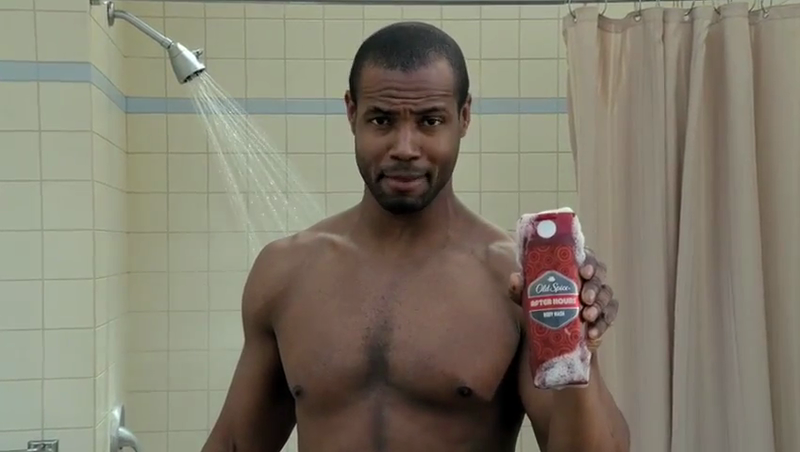
“Hello, ladies. Look at your man. Now back to me. Now back at your man. Now back to me. Sadly, he isn’t me. But if he stopped using lady-scented body wash and switched to Old Spice, he could smell like he’s me.”
The Context
Wieden+Kennedy Portland had held the Old Spice account since 2006, and by 2010 the brief was acute: Old Spice’s body wash line was being outsold by Dove Men+Care and Axe, and the brand’s associations were so calcified that conventional advertising wasn’t moving the needle. Research had uncovered one actionable insight: women made or influenced a significant share of men’s grooming product purchases. Almost no men’s personal care advertising acknowledged this reality.
The creative team (led by W+K creatives Craig Allen and Eric Baldini) set out to make an ad that was genuinely funny and spoke to women without being condescending to either audience. The premise required something unusual: a man who could be physically ideal and completely ridiculous simultaneously, and who could play both completely straight.
Isaiah Mustafa, a former wide receiver who had appeared in supporting roles without breaking through, auditioned and was cast. The production was technically ambitious: the 33-second commercial was filmed in a single take, with Mustafa moving from bathroom to boat to horseback while delivering the monologue without a cut. Director Tom Kuntz created an illusion of continuous motion through practical staging rather than editing.
The Campaign
The original commercial aired during Super Bowl XLIV on February 7, 2010. It ran 33 seconds. Mustafa stood shirtless in a bathroom and addressed the camera (specifically, it became clear, addressing women watching with their partners) in a tone that was simultaneously confident and surreally comic. By the end of the spot, he was on horseback on a beach, holding tickets that “have now turned into diamonds.”
The response was immediate. The ad was the most-discussed commercial of the Super Bowl, and within days it had become the most-watched Super Bowl ad on YouTube at that point.
Then, in July 2010, Wieden+Kennedy and Old Spice raised the stakes. Over 57 hours, Isaiah Mustafa recorded 186 personalized video responses to real people who had engaged with the brand on Twitter and YouTube. The targets included Demi Moore, Alyssa Milano, Ellen DeGeneres, and eventually the Sesame Street account. Regular fans who had tweeted at Old Spice received their own responses as well, filmed in the same bathroom setting, same tone, same absurdist confidence.
The videos were uploaded in real time throughout the 57-hour window. W+K had a full production setup running continuously, turning around personalized video responses faster than any brand had done before on social media. The aggregate view count during that week reached roughly 40 million on YouTube alone.
Why It Worked
The campaign succeeded for reasons that are worth separating because they’re individually instructive.
The humor was the foundation, and the humor was real. There’s a specific quality to genuinely funny advertising: it’s funny the third time you see it, not just the first. The Old Spice commercial works on repeat viewings because the jokes reward attention: the transitions between locations, the escalating absurdity of the props, the specificity of “tickets that have now turned into diamonds.” This is different from advertising that generates a polite smile at first exposure and nothing afterward.
The decision to address women directly was strategically sharp. Men’s grooming advertising in 2010 was entirely addressed to men, usually through sports imagery or sex appeal. The opening line, “Hello, ladies,” acknowledged something everyone in a heterosexual relationship already knew: the partner often picks the grooming products. By speaking to the decision-maker rather than the nominal user, Old Spice unlocked an audience that every other men’s brand was ignoring.
The Response Campaign’s success was partly about novelty (nobody had done real-time personalized brand video response at that scale before), but mostly about execution. The videos were funny. Mustafa maintained the exact same comedic register across 186 iterations filmed under production pressure. W+K’s writers produced fresh, personalized material at a rate that shouldn’t have been possible without significant quality degradation. The quality held.
The Results
Old Spice body wash sales grew by approximately 107% year-over-year in the period following the campaign launch. For a brand that had been stagnant or declining, this was a reversal of significant magnitude. Old Spice went from a brand that younger men associated with their grandparents’ medicine cabinet to one that college students were actively citing in conversation.
The Cannes Grand Prix for Film acknowledged the original commercial in 2010. Industry recognition across One Show, the Effies, and numerous other competitions followed. The campaign is regularly cited in advertising curricula as the defining example of a viral brand campaign that achieved both cultural impact and sales results, though often these are disconnected.
Mustafa continued in the role through subsequent campaigns with diminishing but still-present returns. Old Spice later introduced a second character, Fabio, in a deliberately polarizing sequel campaign, and eventually evolved the creative in other directions. None of these quite matched the original’s impact.
The Lesson for Today’s Marketers
The Old Spice campaign gets summarized as “humor and social media” in most marketing retrospectives, which is accurate but unhelpful.
The more precise lesson is about the difference between being funny and being safe. Most brand humor is engineered to be inoffensive rather than to be funny. It’s likeable at low intensity, the emotional equivalent of a polite laugh. Old Spice was actually funny, at a level that required the client to trust the agency, the agency to trust the writer, and everyone to trust Isaiah Mustafa’s commitment to an absurd premise played with complete sincerity.
That trust is rare, and its rarity is why genuinely funny advertising is rare despite the evidence that it works. The brands willing to take real comedic risk, to make something that might not land, earn a quality of attention and affection that responsible, middle-of-the-road brand content never achieves.
The secondary lesson is about audience mapping. Before you define your audience as “the person who uses the product,” ask who actually makes the purchase decision. In 2010, Old Spice was marketing to men who were already not buying the product. W+K found the person actually standing in the aisle and spoke to her.
Key Results
- Sales Growth: Old Spice body wash sales increased approximately 107% year-over-year in the months following the campaign and Response Campaign launch
- YouTube Views: The original commercial became the most-watched Super Bowl ad on YouTube at the time; the Response Campaign generated roughly 40 million views in a single week
- Market Position: Old Spice became the number one most-viewed sponsored channel on YouTube during the Response Campaign
- Industry Recognition: Won the Grand Prix for Film at Cannes Lions 2010; also awarded at One Show, Effies, and multiple other industry competitions
- Response Campaign Output: 186 personalized video responses created in 57 hours, replied to celebrities, journalists, and regular fans on Twitter and YouTube
SWOT Analysis
| Strengths | Weaknesses | Opportunities | Threats |
|---|---|---|---|
|
|
|
|
Key Takeaway
Genuine humor — not safe, brand-approved 'fun' — is one of the most underutilized tools in marketing, and the brands willing to actually be funny rather than just likeable earn a loyalty that rational messaging can't touch.