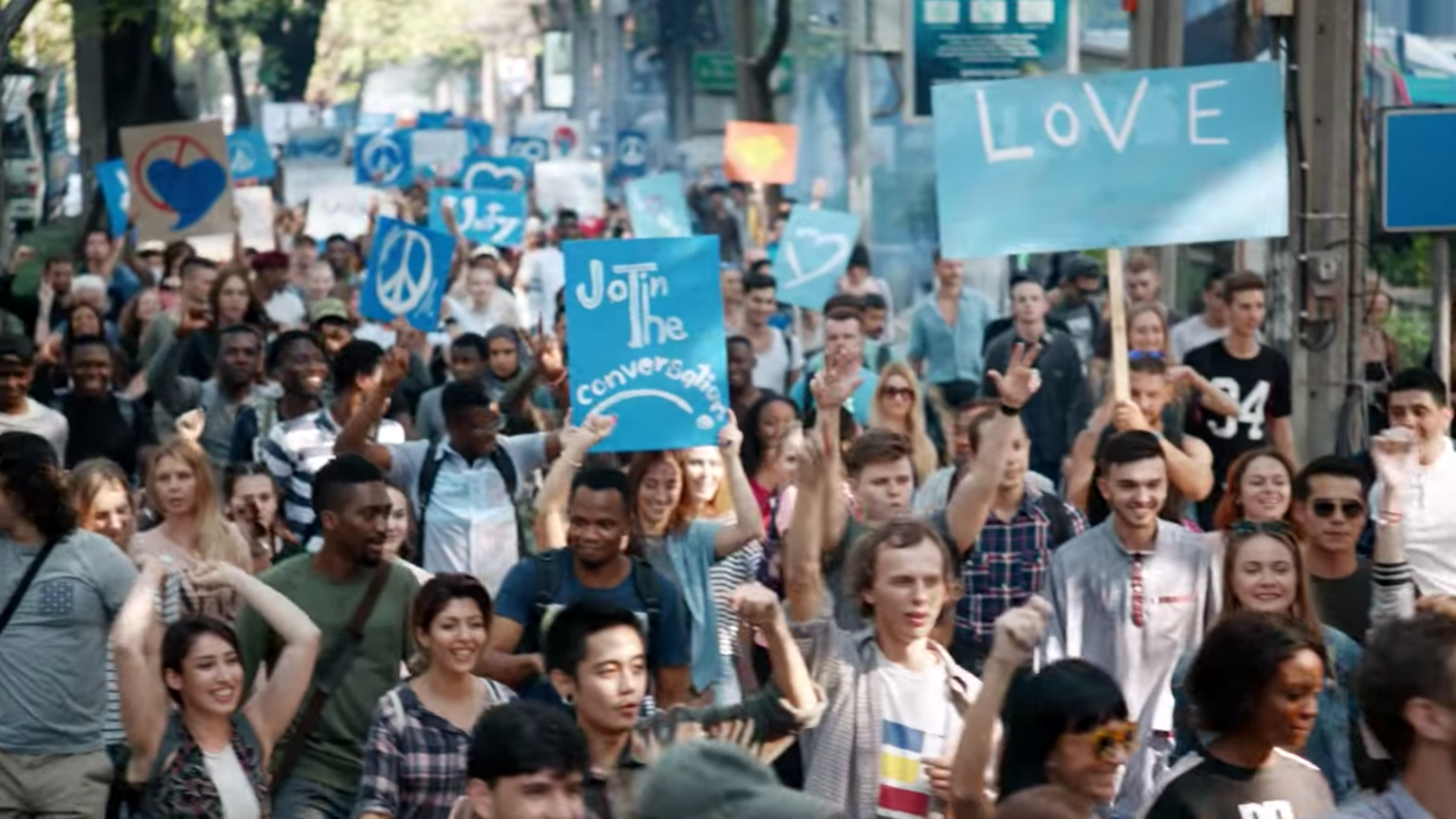
Nike "Dream Crazy" — The Colin Kaepernick Campaign Case Study
Nike put Colin Kaepernick's face on a global ad campaign knowing full well that a percentage of their customers would burn their shoes. They did it anyway.
On September 3, 2018, Nike posted a black-and-white close-up of Colin Kaepernick’s face to social media. The copy read: “Believe in something. Even if it means sacrificing everything.” Within hours, the hashtag #BoycottNike was trending. By the next morning, videos of people cutting the swoosh off their socks and burning their own shoes were circulating widely. Nike’s stock dropped about 3% in the immediate aftermath.
Nike’s marketing team watched all of this happen and did not pull the campaign. That decision turned out to be right, and the reasons why are worth understanding in detail.
The Context
By 2018, Nike was approaching the 30th anniversary of the “Just Do It” slogan, one of the most recognized brand lines in advertising history. The platform had been introduced in 1988, a year when Nike was actually losing market share to Reebok, and the campaign turned the company’s fortunes around permanently. Thirty years later, Nike needed the anniversary to feel like more than nostalgia.
The cultural backdrop was unavoidable. Colin Kaepernick had started kneeling during the national anthem before San Francisco 49ers games in 2016, a protest against police brutality and racial injustice in America. He’d become the most politically divisive figure in professional sports. After the 2016 season, no NFL team signed him, a circumstance widely attributed to the political pressure his presence would bring. He filed a collusion grievance against the NFL. He was, by any definition, a person who had sacrificed his career for a belief.
Nike had a contractual relationship with Kaepernick before the campaign; they’d never cancelled it, even during the controversy. But choosing to make him the face of a global anniversary campaign was a different level of commitment entirely. Nike executives knew the backlash was coming. The internal debates, later reported in various business press accounts, centered not on whether there’d be blowback but on how large and sustained it would be.
The Campaign
The print ad was simple: Kaepernick’s face, the copy, the swoosh. The two-minute film, “Dream Crazy,” directed by Lance Acord and narrated by Kaepernick himself, followed a broader roster of athletes who had pushed against limits: a one-armed wrestler, a young football player from a homeless background, LeBron James, Serena Williams. The narration built to a challenge: “Don’t ask if your dreams are crazy. Ask if they’re crazy enough.”
The Kaepernick images dropped first on social media on September 3. The full TV spot ran during the NFL season opener on September 6, which was either a very confident choice or a deliberately provocative one depending on how you read it. Placing a pro-Kaepernick ad inside NFL programming, which had been the venue for the original protests and the league’s subsequent attempts to suppress them, was not subtle.
Wieden+Kennedy had worked with Nike since the original “Just Do It” campaign. The creative team understood that the 30th anniversary moment required the campaign to demonstrate what the slogan actually meant, not just celebrate it. “Just Do It” had become so familiar it had nearly lost its edge. Kaepernick, who had literally just-done-it at enormous personal cost, gave the slogan back its meaning.
Why It Worked
The boycott was real. Shoes were burned, social posts were deleted, customers wrote angry letters. But the boycott participants were, in aggregate, not Nike’s growth customers. Nike’s core buyer in 2018 skewed younger, more urban, and more diverse. Research Nike had done on brand perception across demographic segments showed that Kaepernick’s favorability ratings in those groups were substantially positive. The customers most likely to cut their swooshes off were customers Nike was already losing to other brands, or customers who bought Nike infrequently enough that their departure wouldn’t move the revenue needle.
This is the first and most important reason it worked: Nike didn’t take a leap of faith. They took a calculated risk based on actual knowledge of their customer base. The framing of “Nike bravely stood for something” is partially true but understates the strategic rigor behind the decision.
The second reason it worked is that the backlash generated enormous earned media. Every burning-shoe video was free advertising, viewed by people who had no idea the campaign existed. The controversy made the campaign the story, and the story reached audiences the paid media budget could never have touched. Nike spent money on media placement; the internet spent far more amplifying it at no cost to Nike.
The third reason is that the creative was genuinely good. The “Dream Crazy” film works as a standalone piece of storytelling. The athlete vignettes build properly. Kaepernick’s narration is composed and dignified rather than inflammatory. The film earns its emotional notes. A weaker execution of the same idea could have felt exploitative or calculated; the craft level of Wieden+Kennedy’s work made it feel sincere.
The Results
The numbers moved in Nike’s direction quickly. Online sales in the days following the campaign’s launch rose roughly 31% compared to the same period the prior year. The initial stock drop recovered within weeks. By early 2019, Nike’s stock had reached an all-time high. The “Dream Crazy” ad won an Emmy for Outstanding Commercial. Kaepernick and Nike eventually settled his collusion grievance with the NFL in February 2019, around the same time the campaign was receiving industry recognition.
The longer-term brand effect is harder to isolate from Nike’s general market performance in this period, but brand tracking data consistently showed improvement in Nike’s key metrics among the younger consumers who are its primary growth target. The campaign moved the needle in the right direction with the right people.
It’s also worth noting that the campaign didn’t fix Nike’s supply chain criticisms, its diversity-in-leadership issues, or any other substantive corporate governance concern. Standing with Kaepernick didn’t make Nike a more ethical company in every dimension. Some of the most pointed criticism came from labor advocates who found the juxtaposition of progressive messaging and documented factory conditions in overseas manufacturing to be jarring. Those are fair observations, and they sit alongside the commercial success without canceling it.
The Lesson for Today’s Marketers
The most common misreading of this campaign is that it proves “brands should take political stances.” That’s too broad to be useful and has sent a lot of brands into expensive trouble.
The actual lesson is more precise. Nike succeeded because they identified a specific position, on a specific issue, held by a specific person, whose values genuinely overlapped with the values of Nike’s most important customers. The decision was data-informed, strategically coherent, and executed by people who understood the creative risk.
Before a brand walks into a controversial territory, the questions worth asking are: Do you actually know where your core customers stand on this? Is the position compatible with what you sell? Can you sustain it if the pressure intensifies? And are you prepared to take the genuine commercial hit if you’re wrong about the first question?
Nike’s answer to all four questions was yes. That’s why it worked.
Key Results
- Online Sales Lift: Nike's online sales rose approximately 31% in the days immediately following the campaign launch compared to the same period the prior year
- Stock Performance: Nike's stock reached an all-time high within months of the campaign's September 2018 launch, recovering fully from the initial 3% post-announcement dip
- Emmy Award: The 'Dream Crazy' ad won an Emmy for Outstanding Commercial in 2019
- Brand Sentiment: Among consumers under 35, Nike's favorability ratings strengthened materially following the campaign; the boycott audience skewed older and was not Nike's core growth demographic
SWOT Analysis
| Strengths | Weaknesses | Opportunities | Threats |
|---|---|---|---|
|
|
|
|
Key Takeaway
Taking a genuinely polarizing position works commercially when you've correctly identified which side of the divide your growth customers are on — Nike didn't get lucky, they did the math.