Coca-Cola "Share a Coke" Campaign Case Study
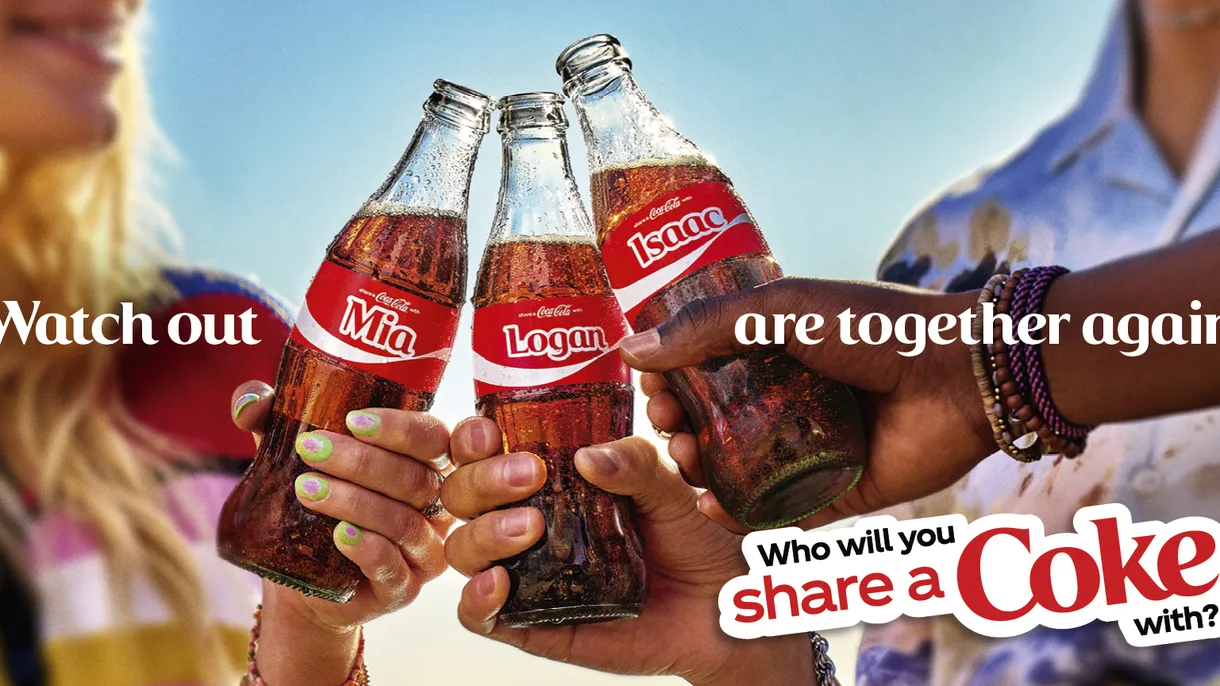
Coca-Cola reversed a decade of declining sales in Australia by doing something no brand manager would sanction: erasing their own logo and replacing it with someone's name.
In 2011, Coca-Cola did something that most brand managers would consider corporate heresy: they covered up their own logo. On hundreds of millions of cans and bottles sold across Australia, the iconic red script that had been the brand’s most recognizable asset for over a century was replaced with someone’s name. Sarah. James. Emma. Mate. Mum. The result wasn’t confusion. It was a sales revival that had eluded the company for a decade, and one of the most studied campaigns in modern marketing history.
The Context
By the time Ogilvy Sydney started developing what would become Share a Coke, Coca-Cola’s sales in Australia had been declining for roughly ten years. This wasn’t a catastrophic collapse. Coke remained the dominant soft drink in the market, but the trajectory was stubborn and wrong. Young Australians, roughly 13 to 29, had grown up with Coca-Cola as ambient background noise. They recognized it completely and cared about it very little.
Brand tracking showed awareness near 100% and personal relevance near zero for a meaningful chunk of that demographic. That’s a specific kind of marketing failure: the brand isn’t broken, it’s invisible. You can’t fix invisible with another billboard of a smiling person holding a red can.
The brief to Ogilvy wasn’t to solve a PR crisis or respond to a competitor. It was to re-establish a personal connection: to make young Australians feel that Coca-Cola was their brand again, not just something their parents drank.
The Campaign
The idea sounds almost too simple: put people’s names on the bottles.
The 150 most popular names in Australia were selected, representing roughly 42% of the population. Alongside personal names came a roster of relational terms: “Mate,” “Mum,” “Dad,” “Bestie,” “Legend.” A campaign microsite let consumers order a bottle with any name they wanted, which proved enormously popular. The bottles appeared in supermarkets, petrol stations, and convenience stores across the country in the summer of 2011, just as the weather got hot and Coke most wanted to be in people’s hands.
The TV and out-of-home advertising told people to “share a Coke” with someone, but the real mechanic was more powerful than any ad. People walked through stores scanning shelves. When they found their name, or a friend’s name, or a partner’s name, the act of picking it up felt different from any ordinary purchase. It felt intended. Buying a bottle with a friend’s name was a small gesture. Photographing it was natural. Posting it was almost obligatory.
The hashtag #ShareaCoke went live alongside the campaign. Nobody had to explain what to do with it.
Why It Worked
Three mechanics interlocked in a way that most personalization campaigns don’t replicate.
First, the search behavior. When you know that 150 names exist somewhere in the wild, you instinctively start looking for yours. This isn’t passive brand awareness; it’s active physical engagement with the product in retail. Ogilvy essentially gamified the act of buying a Coke. The brand became worth hunting for.
Second, the gift dynamic. Buying a bottle with someone else’s name on it is a small but real gesture of attention. “I saw your name and thought of you.” That’s emotionally meaningful, and Coca-Cola facilitated it without manufacturing it. Every named bottle became a potential micro-gift. The brand inserted itself into moments of human connection without forcing it.
Third, the user-generated content loop. In 2011, smartphone photography and Facebook were mainstream; Instagram had launched but hadn’t yet exploded; Twitter was growing fast. The combination of a visually distinctive, highly personal product photograph and a clear hashtag created a content loop that brands now engineer deliberately. In 2011, it was still novel enough to work organically.
Perhaps most importantly: Coca-Cola had the institutional courage to cover up its own logo. For a brand whose visual consistency is a core strategic asset, that’s a genuine risk. The willingness to subordinate the brand mark to the consumer’s identity is what made the campaign feel generous rather than clever.
The Results
In the first Australian summer, volume sales of Coca-Cola rose by approximately 4%. That sounds modest until you understand that it snapped a ten-year decline in a single season. In a market where the brand had been losing ground every year, that reversal was a result that multiple prior campaign strategies had failed to achieve.
Over 250 million named Coca-Cola bottles were sold in Australia during the campaign’s first year, in a country with a population of roughly 23 million people. Social engagement was equally striking, with over 500,000 Twitter mentions and more than 18 million Facebook impressions generated organically in Australia alone.
The campaign rolled out to Western Europe in 2012, then to the United States in summer 2014, where it became one of Coca-Cola’s most-shared campaigns. By 2014, Share a Coke had run in more than 80 countries, with each market selecting its own culturally relevant names. The US launch in 2014 reportedly produced the first measurable increase in consumption of Coca-Cola among teenage consumers in over a decade.
The Lesson for Today’s Marketers
The easy takeaway from Share a Coke (“personalization works”) is also the least useful. Marketers have been slapping names on things ever since, with sharply diminishing returns.
The actual lesson is about the mechanics of social sharing. What made Share a Coke work wasn’t the individual recognition (“my name is on a bottle”). It was that the personalization was inherently outward-facing. The campaign gave people a reason to think about other people. Finding a Coke with your friend’s name is an act of attention. Giving it to them is an act of care. Photographing it is an act of storytelling.
Most personalization campaigns are built around the individual. Share a Coke was built around relationships. That’s why the generic relational terms (“Mate,” “Mum,” “Legend”) worked just as well as personal names, sometimes better. They captured sentiments that a specific name couldn’t.
Before you personalize, ask the harder question: does this personalization give people a reason to connect with someone else? If yes, you’re building a campaign. If no, you’re building a novelty with a short shelf life.
Key Results
- Volume Sales Lift: Approximately 4% increase in Australia in the first summer, reversing nearly a decade of decline
- Named Bottles Sold: Over 250 million named bottles in Australia alone — roughly 11 per person in the country
- Social Reach: 500,000+ Twitter mentions and 18 million+ Facebook impressions in the Australia first-year rollout
- Global Scale: Expanded to 80+ countries between 2012 and 2014, with each market localizing its name selection
- US Impact: First increase in Coca-Cola consumption among US teenagers in over a decade, reported in the 2014 US launch year
SWOT Analysis
| Strengths | Weaknesses | Opportunities | Threats |
|---|---|---|---|
|
|
|
|
Key Takeaway
Personalization drives the most engagement when it enables social behavior rather than just individual recognition — the campaign's genius was that finding a Coke with your friend's name was a gesture, not a transaction.