BMW Films "The Hire": The Series That Invented Branded Entertainment
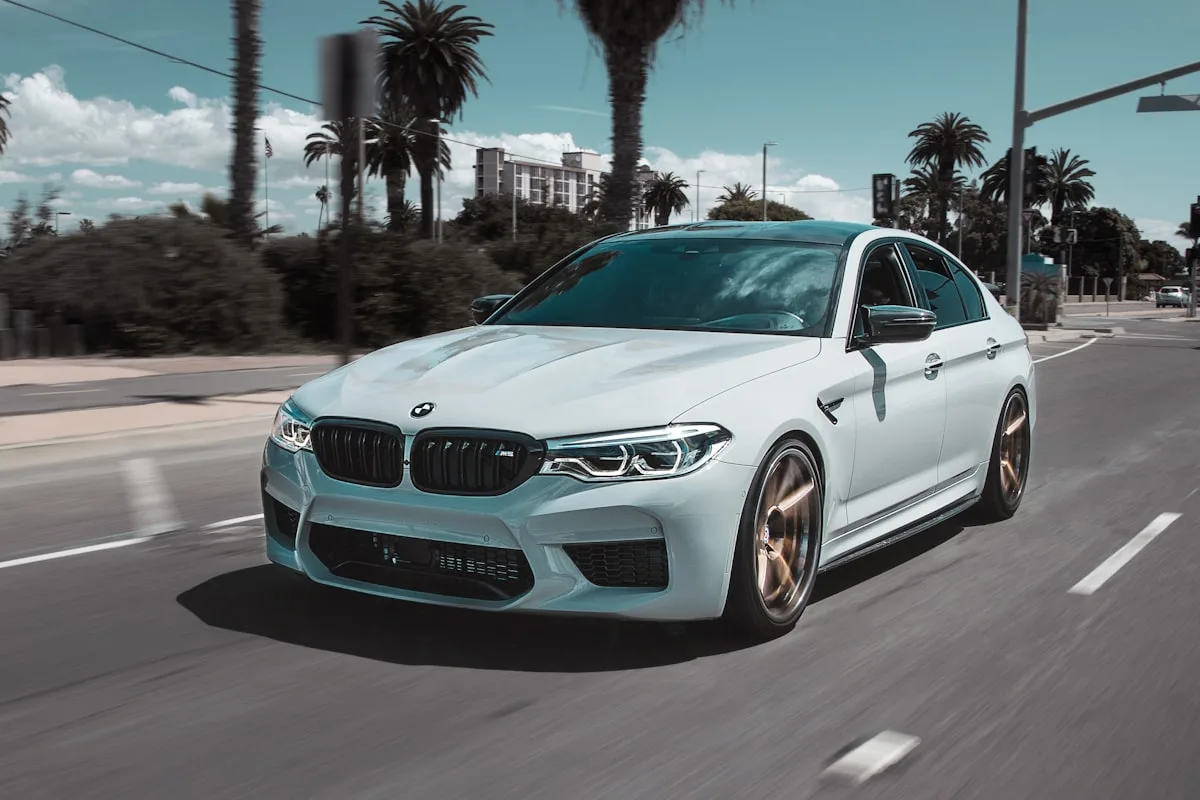
Eight short films by directors including Ang Lee and Guy Ritchie, starring Clive Owen, only available on the internet: BMW invented branded entertainment in 2001 and nobody has done it better since.
In 2001, if you wanted to watch “The Hire,” you had to go to a website, create an account, and wait for a video to buffer over a dial-up or early broadband connection. BMW made this deliberately inconvenient. The inconvenience was the point.
The first film in the series, “Ambush,” directed by Joe Carnahan, opens with a tense car chase through winding roads. Clive Owen is the driver. The car is a BMW 5 Series. The car is not the subject of the film. It’s the instrument through which a cool, inscrutable professional does something impressive under pressure. By the time the film ended, you had spent seven minutes in a BMW doing things you couldn’t do in your own car. The feeling was not “I’ve been advertised at.” The feeling was “I want that life.”
The Context
BMW’s target in 2001 was younger than its typical buyer: upwardly mobile professionals who were making their first or second real car purchase and hadn’t yet formed the deep brand loyalty that tends to calcify in middle age. These people were early internet adopters. They were, statistically, the demographic most likely to have broadband at home and most likely to feel that television advertising was something to be skipped.
Fallon Worldwide’s brief from BMW was essentially: reach these people in a way that respects their intelligence and their media habits. Traditional advertising wasn’t the answer because the people they wanted to reach had already developed fairly good defenses against it.
The solution was to stop making advertising and start making entertainment. Not branded content. Entertainment. The distinction matters enormously and is the thing that most subsequent attempts at this format have gotten wrong.
The Campaign
Fallon commissioned eight short films over the campaign’s run. Directors included Ang Lee, who brought a quieter and more emotionally complex sensibility to the series. Guy Ritchie, then riding the success of “Snatch,” brought kinetic energy and British attitude. Tony Scott contributed speed and visual tension. John Frankenheimer, who had directed “Ronin” with its legendary car chase sequences, brought authority.
Clive Owen starred in all of them as “The Driver,” a hired professional with no clear backstory who completed various missions in each film. His character was deliberately minimal. He was capable, calm, and slightly mysterious. The BMW cars in each film were treated the way a carpenter’s tools would be treated in a film about a carpenter: functional, present, important to the work, but not the subject of the story.
The films were only available at BMWFilms.com. You had to register to watch them. This was a deliberate constraint. In an era before YouTube, before streaming services had established the norm of free on-demand content, requiring registration felt like access rather than like a data collection exercise. You were getting something. BMW was getting something. The exchange felt fair.
BMW also had DVDs of the films included with new car purchases, which gave owners something to share with people who hadn’t sought the films out online. Word spread through social groups as well as through the internet.
Why It Worked
The simplest explanation is that the films were actually good. Ang Lee’s entry, “Chosen,” features a child who may or may not be a reincarnated religious leader; it’s contemplative and strange in a way that has nothing to do with car marketing. Ritchie’s “Star” features a self-obsessed pop star played by Madonna and is essentially a short comedy about celebrity ego. These are not brand films with production values. They’re short films by significant directors, given genuine creative latitude, that happen to feature a BMW as a character element.
That creative latitude is the thing that’s hardest to replicate. It requires a client willing to commission entertainment without controlling the entertainment, trusting that quality and association will do the work that explicit messaging would undermine.
The internet-only, registration-required distribution was not just a data play. It created a behavioral dynamic that advertising can’t create: active seeking. The people who watched these films went looking for them. They made a choice to invest time and attention before they saw a single frame. That decision pre-committed them to engagement in a way that passive exposure never does. An ad on television interrupts. BMWFilms.com required a detour. The people who made that detour were already, at some level, interested in what BMW had made.
The format also solved a specific problem for automotive advertising. Car commercials are almost universally dishonest. They show vehicles doing things that are illegal, unrealistic, or impossible: driving through empty cities, through deserts, around perfectly staged mountain roads. Nobody believes them. The BMW films didn’t claim anything about the cars. They demonstrated, through fictional scenarios, what it felt like to use a car that performed. The difference between a claim and an experience is the difference between an advertisement and a film.
The Results
Over 11 million views in the first four months, from a platform that required active registration and buffered slowly on most internet connections, is a number that marketing historians still cite as remarkable. BMW received hundreds of thousands of registered users as first-party data, people who had voluntarily identified themselves as interested enough in BMW’s content to create an account.
The campaign was covered by publications that didn’t cover advertising: general press treated the films as a cinematic development, not as a marketing story. The Cannes Lions recognized the work. More importantly, several of the films were shown at film festivals, which is a different category of cultural validation than any award the advertising industry gives itself.
BMW’s sales during the campaign period were strong, though automotive sales attribution is notoriously complex and the films were running alongside conventional advertising and dealership programs.
The Lesson for Today’s Marketers
Every major brand has tried some version of branded entertainment since 2001, and almost none of it has worked as well. The reasons are worth being precise about.
Most branded entertainment fails because it’s advertising with a longer runtime. The brand’s messages appear too frequently, too explicitly, or too early in the viewing experience. The viewer’s implicit contract with entertainment is that they’ll accept product presence in exchange for genuine storytelling, but they’ll abandon that contract the moment the story starts feeling like a pretext for selling.
BMW’s films worked because the brand understood its role: the car was a character, not the message. The films were about people doing interesting things. The car was how they did them. The aspiration was human, not automotive.
The second lesson is about distribution choices and what they signal about a brand’s confidence in its content. Making something available everywhere signals that you need everyone to see it. Making something available only in one place, requiring active effort to access, signals that you believe what you’ve made is worth the effort. BMW’s decision to restrict distribution was a creative and strategic choice, not a limitation. It told the audience something about the quality of what they were about to watch before they watched it.
Branded entertainment doesn’t scale easily. It requires significant investment in creative quality, genuine latitude for the filmmakers, and strategic patience. Those three things are harder to secure inside large organizations than the production budget. That’s why most brands have tried and most have failed, and why “The Hire” is still the reference point twenty-plus years later.
Key Results
- Film views (first four months): Over 11 million; extraordinary for 2001 internet
- BMWFilms.com registrations: Hundreds of thousands of registered users generated as owned data
- Directors engaged: 8 films, directors including Ang Lee, Guy Ritchie, Tony Scott, John Frankenheimer
SWOT Analysis
| Strengths | Weaknesses | Opportunities | Threats |
|---|---|---|---|
|
|
|
|
Key Takeaway
Branded entertainment only works when the entertainment is genuinely good enough to exist without the brand. The brand succeeds by association, not by insertion.
Enjoying our content? Make us a preferred source on Google.
Add as Preferred Source