-
- No Comments
- April 22, 2026

Apple’s “Think Different” campaign is one of the most celebrated branding moments in advertising history. Launched in 1997, when Apple was on the edge of bankruptcy, the campaign was not just a marketing message, it was a declaration of identity. Through a simple two-word slogan and a series of powerful portraits, Apple reminded the world of what it stood for: creativity, rebellion, and the courage to see things differently. It marked the beginning of one of the greatest comebacks in business history.
By 1997, Apple was in serious trouble. Its share of the personal computer market had fallen from a peak of 14 percent in 1993 to under 3 percent. The company had reported record losses of over $1 billion, its stock had crashed, and industry commentators were openly predicting its death. Microsoft was dominating the PC world, and Apple’s own product line had become bloated and unfocused. Steve Jobs, returning after a twelve-year absence, needed to rebuild confidence among customers, investors, and employees. Instead of launching product-focused ads, he chose something bolder, a campaign that would remind everyone what Apple was really about.
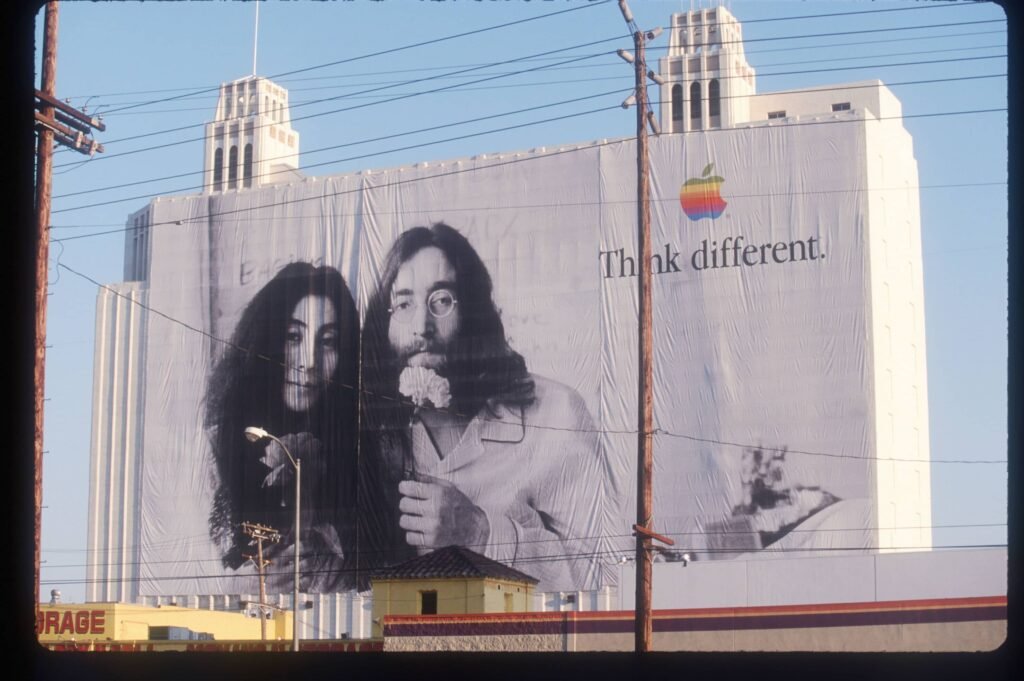
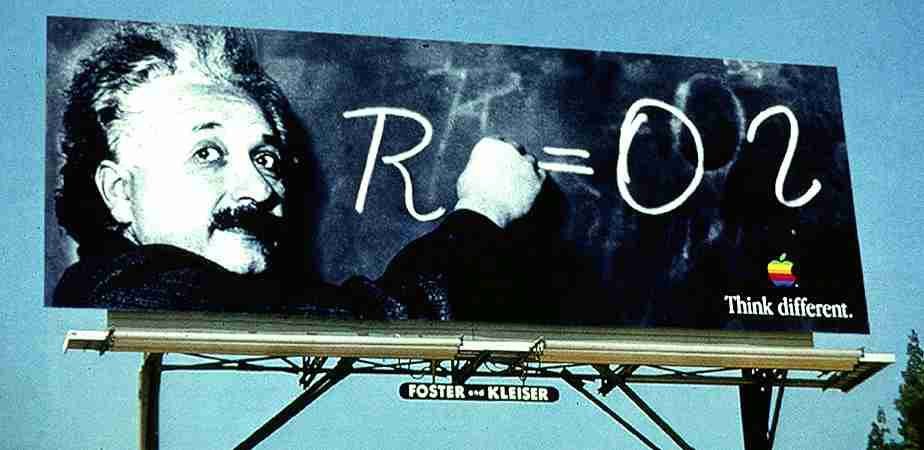
“Think Different” was developed by the advertising agency TBWA\Chiat\Day, with the slogan created by art director Craig Tanimoto and the famous script co-written by Rob Siltanen and Ken Segall. The campaign debuted on September 28, 1997, with a sixty-second television spot featuring a voiceover by Richard Dreyfuss praising “the crazy ones, the misfits, the rebels, the troublemakers.” Alongside this were striking black-and-white print ads featuring icons like Albert Einstein, Martin Luther King Jr., Mahatma Gandhi, Pablo Picasso, John Lennon, and Amelia Earhart. None of the ads mentioned a single Apple product. Instead, they celebrated people who changed the world, and quietly invited customers to see themselves as part of that tradition.
What made the campaign powerful was its refusal to sell in the traditional sense. Apple did not pitch features, specs, or prices. It told a story about identity and association. Owning an Apple meant standing with the thinkers, the creators, and the outsiders. Steve Jobs personally negotiated the rights to use the likenesses of many of the subjects, including calling the families of Jim Henson and John F. Kennedy and flying to New York to meet with Yoko Ono. These were not celebrity endorsements, they were cultural alliances that gave the brand borrowed gravitas.
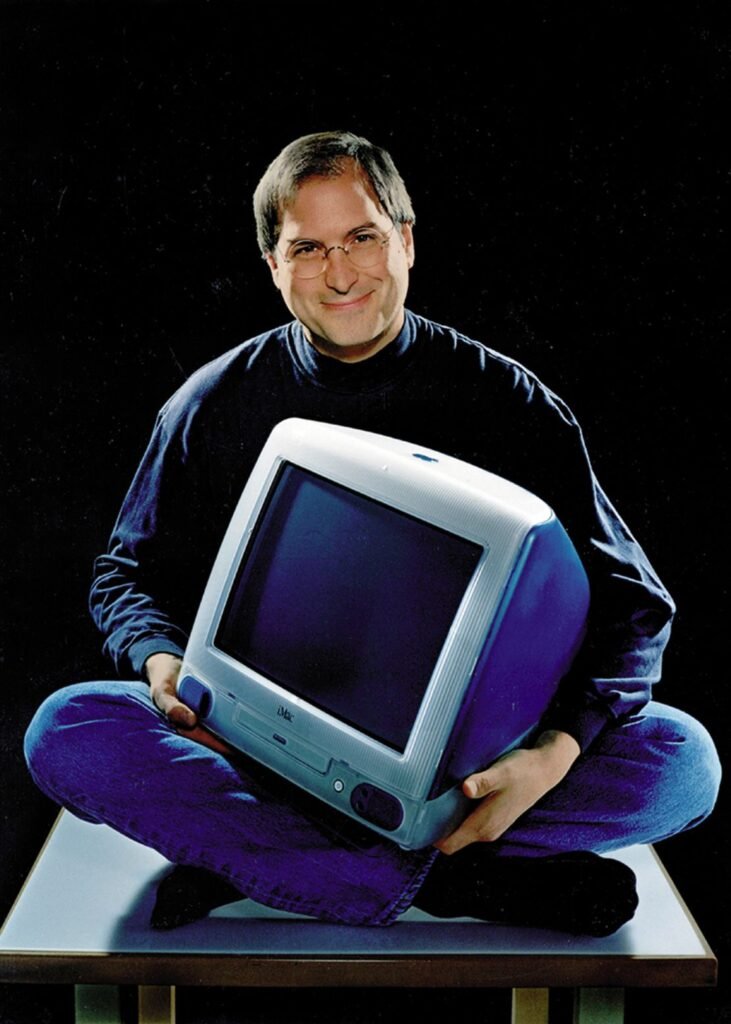
The emotional framing of “Think Different” did more than improve advertising metrics. It gave Apple a reason to exist again in the public imagination. Customers who had lost faith began to trust the brand once more. Within twelve months of the campaign’s launch, Apple’s stock price had tripled. The 1998 launch of the iMac, with its colourful translucent design, felt like proof that the brand really was thinking differently. The campaign ran until 2002 and quietly continued in supporting roles long after, shaping every Apple product launch that followed.
“Think Different” also set the tone for how Apple would communicate for the next two decades. From the iPod’s “1,000 songs in your pocket” to the iPhone’s unveilings, Apple continued to sell ideas, not specifications. The campaign taught the industry that a brand could be built on philosophy rather than product features, and that a confident point of view could be more valuable than a long list of benefits. Today, when people speak about purpose-driven marketing, they often trace the lineage back to this one campaign.
The reason “Think Different” worked so deeply is that it did not ask customers to admire Apple, it asked them to see themselves in Apple. The campaign flattered the audience without patronising them. It told designers, students, writers, and engineers that their instinct to question the status quo was worth celebrating. This feeling of being understood, of being part of a tribe of creative thinkers, turned buyers into believers. People did not just buy a computer, they bought into a worldview.
The same instinct applies to search. Knowing exactly who you are talking to is what separates a page that ranks from one that gets ignored. It is the core of how I approach SEO for businesses in Kerala, matching what a brand offers to what real people are typing into Google.
Apple’s “Think Different” campaign is a reminder that the most powerful marketing often starts with the hardest question: who are we, really? By answering that question with courage and clarity, Apple transformed itself from a failing computer maker into a cultural icon. The campaign proved that brand advertising, when rooted in genuine identity, can deliver commercial results that outlast any single product cycle. For marketers today, “Think Different” remains a masterclass in what is possible when a brand stops chasing customers and starts inspiring them.
Campaign Longevity and Recognition
The “Think Different” campaign officially ran from 1997 to 2002 and is consistently ranked among the greatest advertising campaigns of all time. It was recognised by Advertising Age and USA Today as one of the best campaigns of its launch year, and it has since become a standard case study in marketing textbooks and brand strategy courses worldwide.
Sales Growth
Apple’s financial trajectory shifted dramatically in the years following the campaign. After reporting losses of more than $1 billion in 1997, Apple returned to profitability by 1998. Within twelve months of the campaign’s launch, Apple’s stock price had tripled, and the iMac launched in August 1998 sold close to 800,000 units in its first five months. Two decades later, Apple would become the first publicly traded U.S. company to cross a $1 trillion valuation.
Market Share
Apple’s share of the U.S. personal computer market, which had fallen to 2.8 percent by 1997, began to stabilise and climb gradually through the campaign years. More importantly, the campaign rebuilt consumer confidence and created the brand equity that made later categories like the iPod, iPhone, and iPad possible, where Apple now holds dominant share positions.
Emotional Branding Effectiveness
“Think Different” is often cited alongside Nike’s “Just Do It” as one of the strongest examples of identity-driven branding in the last fifty years. Research by the Harvard Business Review shows that brands that successfully tap into emotional and identity-based branding can achieve up to a 23 percent increase in sales compared to those competing purely on functional features, a pattern Apple has continued to exploit long after the original campaign ended.
SWOT Analysis of Apple
SWOT Analysis of Apple
From the “Think Different” Campaign Case Study
✅ Strengths
- Iconic Brand Identity: One of the most recognisable and respected brands globally.
- Design and Innovation: Industry-leading product design and user experience.
- Ecosystem Integration: Tight integration across devices, software, and services.
- Loyal Customer Base: High repeat purchase rates and strong brand advocacy.
- Premium Positioning: Ability to command higher prices than competitors.
⚠️ Weaknesses
- Premium Pricing: Limits access in price-sensitive markets.
- Dependence on iPhone: A large share of revenue comes from a single product line.
- Closed Ecosystem: Limited compatibility can frustrate some users.
- Supply Chain Concentration: Heavy reliance on specific manufacturing regions.
🚀 Opportunities
- Services Growth: Expanding revenue from App Store, iCloud, Apple Music, and Apple TV+.
- Emerging Markets: Significant headroom in India, Southeast Asia, and Africa.
- Wearables and Health: Expanding role of Apple Watch and health technology.
- AI Integration: Positioning across on-device AI and personal assistants.
⚡ Threats
- Intense Competition: Strong pressure from Samsung, Google, and Chinese manufacturers.
- Regulatory Scrutiny: Growing antitrust and privacy regulation in multiple markets.
- Economic Cycles: Premium devices are vulnerable to consumer spending slowdowns.
- Geopolitical Risks: Exposure to US-China trade tensions and supply chain disruption.